Titanium disilicide (TiSi2), as a metal silicide, plays an important duty in microelectronics, especially in Very Large Scale Combination (VLSI) circuits, because of its superb conductivity and low resistivity. It significantly reduces call resistance and enhances current transmission efficiency, contributing to broadband and low power intake. As Moore’s Regulation approaches its limits, the emergence of three-dimensional assimilation innovations and FinFET architectures has made the application of titanium disilicide essential for preserving the efficiency of these innovative production procedures. Furthermore, TiSi2 shows fantastic possible in optoelectronic tools such as solar cells and light-emitting diodes (LEDs), along with in magnetic memory.
Titanium disilicide exists in numerous stages, with C49 and C54 being the most common. The C49 stage has a hexagonal crystal structure, while the C54 stage displays a tetragonal crystal framework. Because of its reduced resistivity (approximately 3-6 μΩ · cm) and higher thermal stability, the C54 stage is chosen in commercial applications. Different methods can be utilized to prepare titanium disilicide, consisting of Physical Vapor Deposition (PVD) and Chemical Vapor Deposition (CVD). The most common technique entails responding titanium with silicon, depositing titanium movies on silicon substrates using sputtering or evaporation, complied with by Quick Thermal Processing (RTP) to develop TiSi2. This approach permits precise thickness control and consistent circulation.
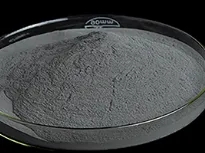
(Titanium Disilicide Powder)
In regards to applications, titanium disilicide locates extensive usage in semiconductor tools, optoelectronics, and magnetic memory. In semiconductor devices, it is utilized for source drain calls and entrance contacts; in optoelectronics, TiSi2 stamina the conversion performance of perovskite solar cells and raises their security while minimizing problem density in ultraviolet LEDs to improve luminous efficiency. In magnetic memory, Rotate Transfer Torque Magnetic Random Accessibility Memory (STT-MRAM) based on titanium disilicide includes non-volatility, high-speed read/write capabilities, and reduced power usage, making it an excellent prospect for next-generation high-density data storage media.
Regardless of the significant possibility of titanium disilicide across numerous state-of-the-art areas, obstacles remain, such as more lowering resistivity, boosting thermal security, and establishing effective, economical massive manufacturing techniques.Researchers are discovering new material systems, enhancing user interface design, regulating microstructure, and creating eco-friendly processes. Efforts include:
()
Searching for brand-new generation materials with doping other components or modifying compound make-up ratios.
Researching ideal matching schemes in between TiSi2 and various other materials.
Making use of advanced characterization techniques to discover atomic arrangement patterns and their effect on macroscopic buildings.
Dedicating to green, environment-friendly new synthesis paths.
In summary, titanium disilicide sticks out for its fantastic physical and chemical buildings, playing an irreplaceable function in semiconductors, optoelectronics, and magnetic memory. Encountering growing technological demands and social obligations, deepening the understanding of its essential clinical principles and checking out ingenious solutions will be crucial to progressing this area. In the coming years, with the emergence of more innovation outcomes, titanium disilicide is expected to have an also wider growth prospect, remaining to contribute to technological progress.
TRUNNANO is a supplier of Titanium Disilicide with over 12 years of experience in nano-building energy conservation and nanotechnology development. It accepts payment via Credit Card, T/T, West Union and Paypal. Trunnano will ship the goods to customers overseas through FedEx, DHL, by air, or by sea. If you want to know more about Titanium Disilicide, please feel free to contact us and send an inquiry(sales8@nanotrun.com).
All articles and pictures are from the Internet. If there are any copyright issues, please contact us in time to delete.
Inquiry us