Scientists and engineers working in advanced semiconductor manufacturing now have access to high-performance Pyrolytic Boron Nitride (PBN) tubes designed specifically for effusion cells in Molecular Beam Epitaxy (MBE) deposition systems. These PBN tubes offer exceptional thermal stability and purity, making them ideal for growing high-quality thin films used in next-generation electronic and optoelectronic devices.

(Pyrolytic Boron Nitride PBN Tubes for Effusion Cells in Molecular Beam Epitaxy Deposition Systems)
PBN is known for its resistance to thermal shock and chemical inertness, even at extreme temperatures. This makes it a reliable material inside MBE chambers where precise control over vapor flux is critical. The new PBN tubes maintain structural integrity during long deposition runs and help reduce contamination risks that can compromise film quality.
Manufacturers produce these tubes using a specialized chemical vapor deposition process that aligns boron nitride crystals in a layered structure. This alignment enhances mechanical strength along the tube axis while preserving smooth internal surfaces. Such features support consistent evaporation rates and uniform material delivery from effusion cells.
The demand for cleaner, more efficient MBE components continues to grow as researchers push the limits of quantum materials and compound semiconductors. PBN tubes meet this need by offering a combination of durability, purity, and performance under vacuum and high-temperature conditions. They are compatible with common source materials like gallium, aluminum, and arsenic, which are frequently used in III-V semiconductor production.
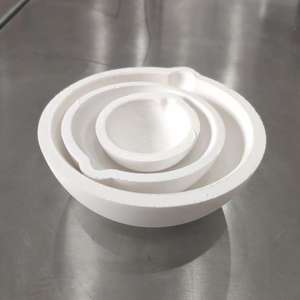
(Pyrolytic Boron Nitride PBN Tubes for Effusion Cells in Molecular Beam Epitaxy Deposition Systems)
Suppliers are now shipping these PBN tubes globally to research labs and production facilities focused on developing advanced devices such as high-electron-mobility transistors, laser diodes, and infrared sensors. Each tube undergoes rigorous inspection to ensure dimensional accuracy and surface finish, helping users achieve repeatable results in sensitive epitaxial growth processes.